
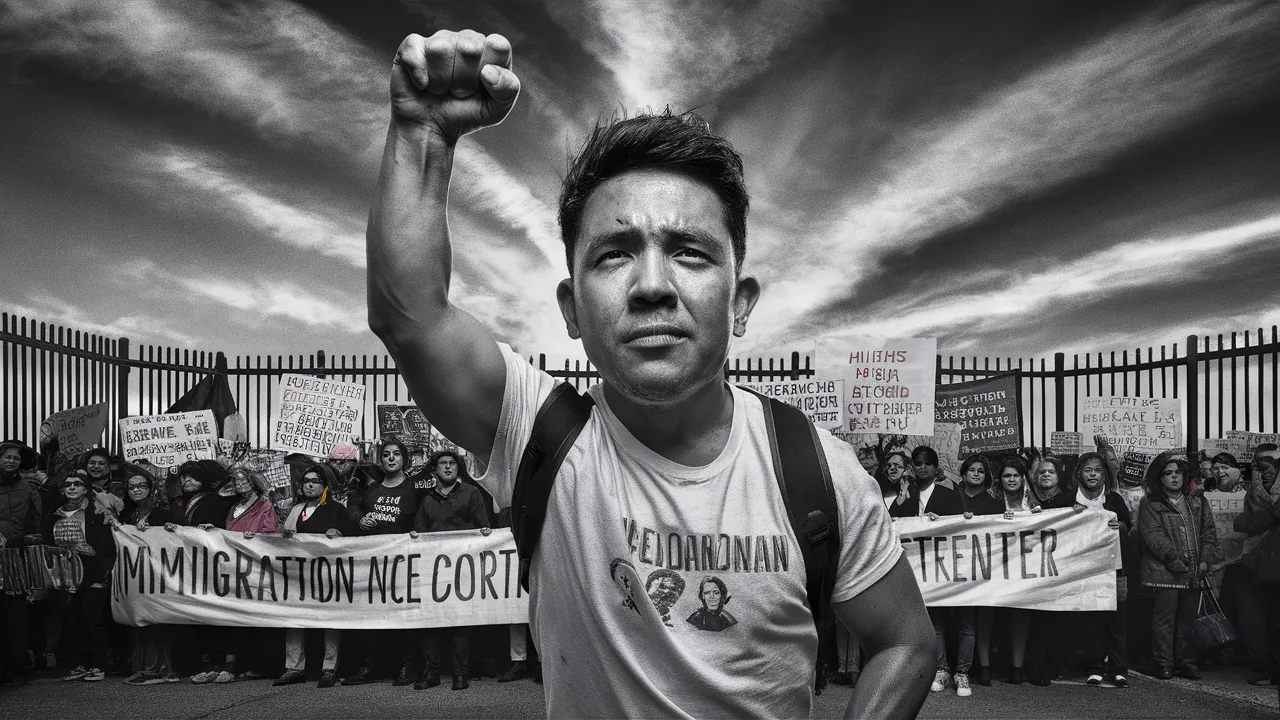
We provide a detailed and informative overview of Claudio Cortez-Herrera ICE detention, an immigration enforcement case that has drawn attention amid broader debates about U.S. immigration policy, detention practices, and legal rights for non-citizens. In 2025, Claudio Cortez-Herrera, a long-time U.S. resident originally from Mexico and a green card holder with two U.S. citizen children, was detained by U.S. Immigration and Customs Enforcement (ICE) officials in Michigan, raising complex questions about enforcement priorities and detention criteria. This article explores the background of the detention, the legal framework under which it occurred, the personal and family implications, and the broader public and policy responses that surround this case.
Who Is Claudio Cortez-Herrera and How Did the Detention Begin?
Claudio Cortez-Herrera ICE Detention is a lawful permanent resident (“green card” holder) who has lived in the United States for over two decades and is the father of two young U.S. citizen children. In April 2025, Ice officials from Detroit’s Immigration and Customs Enforcement division arrested Cortez-Herrera outside his home as he was reportedly on his way to work. According to his family, the detention occurred when he was surrounded by ICE agents without warning and taken into custody. This sequence of events triggered immediate concern from his loved ones and advocates, who emphasized that his long residence and family ties made his detention deeply disruptive and distressing.
Legal Basis for Detention and Enforcement Context
ICE operates under a legal mandate to detain and remove non-citizens who violate immigration law. U.S. immigration law allows ICE to detain individuals, including those with lawful status such as green card holders, under certain circumstances — for example, where there are criminal convictions or issues with admissibility. In their own communication about the case, ICE pointed to Cortez-Herrera’s prior criminal record, noting a conviction that involved first-degree arson and reckless endangering in Delaware. While ICE claimed this as part of the justification for the detention, his family disputes the characterization and context of the past conviction, highlighting how old records can resurface in ways that affect immigration status years after someone has moved on with their life.
This case must also be understood within the broader framework of enforcement priorities under the recent federal administration, which has emphasized immigration crackdowns and increased detentions, even among those with valid documentation. Such enforcement actions raise questions about how immigration law is implemented in practice, the discretion used by enforcement agencies, and the rights of long-term residents with deep family and community ties.
Impact on Cortez-Herrera’s Family and Community
The detention of Claudio Cortez-Herrera has had profound personal implications. His partner and children, including a very young son with autism and a toddler daughter, have been directly affected by his absence. For families like his, prolonged detention can disrupt emotional bonds, daily routines, caregiving responsibilities, and financial stability. These impacts are frequently central issues when advocates and legal counsel argue for release or alternatives to prolonged detention.
Detention centers can be stressful and isolating environments, particularly for individuals who have lived and worked in the United States for many years. While detained, individuals often find it difficult to access legal counsel, maintain contact with family members, or continue employment and caregiving responsibilities. These dynamics underscore the broader human costs of enforcement practices that separate families, even when someone has longstanding ties to the country.
The Immigration Court Process and Legal Rights
Once detained, individuals like Claudio Cortez-Herrera enter the immigration court system, where a judge determines whether they should be released, remain detained, or be ordered removed from the country. In these proceedings, detainees have the right to legal representation — at their own expense — and to present evidence in their defense. They can also seek relief such as cancellation of removal or adjustment of status depending on eligibility and individual circumstances.
Detention does not automatically mean deportation; rather, it signals the beginning of a legal process where evidence, eligibility, and discretion all play roles in determining an individual’s fate. However, navigating the U.S. immigration court system often requires legal expertise, and access to counsel can vary significantly depending on financial resources and support networks.
Public Response and Wider Policy Debates
The detention of Claudio Cortez-Herrera is part of larger national debates about immigration policy, enforcement practices, and the appropriate balance between border security and humanitarian considerations. Advocates for reform argue that cases involving long-term residents with deep ties to their communities highlight the need for more nuanced approaches to enforcement — ones that consider family separation, rehabilitation, and contributions to society.
Critics of current enforcement actions express concern that detaining lawful residents undermines trust in the immigration system and can have ripple effects on communities, instilling fear among immigrant families and discouraging cooperation with law enforcement or public services. These debates are reflected in media coverage, public statements from advocacy organizations, and discussions among policymakers who argue for both stricter and more compassionate immigration frameworks.
Conclusion
The Claudio Cortez-Herrera ICE detention case encapsulates many of the complexities of contemporary U.S. immigration enforcement — from legal grounds for detention to personal and family consequences, and from courtroom procedures to broader public and policy debates. As a long-term resident with U.S. citizen children, Cortez-Herrera’s experience highlights the human impact of enforcement decisions and raises important questions about fairness, discretion, and the future of immigration policy. Understanding this case in context helps illuminate both the challenges individuals face and the evolving conversation about how the United States balances enforcement with family unity and community stability.
Frequently Asked Questions (FAQ)
What does it mean that Claudio Cortez-Herrera was detained by ICE?
Detention means that ICE has taken custody of a non-citizen to begin immigration proceedings. It does not automatically mean deportation, but it starts a legal process in immigration court.
Why was Cortez-Herrera detained despite having a green card?
ICE cited a past criminal conviction as a factor in the detention. U.S. immigration law allows for detention and possible removal under certain conditions, even for lawful permanent residents.
Can he apply for release from detention?
Yes, individuals can request bond, legal hearings, or other forms of relief in immigration court if they meet certain eligibility criteria.
How does detention affect his family?
Detention separates individuals from their families, which can impact emotional well-being, caregiving, and financial stability, especially when children are U.S. citizens.
Does detention mean he will be deported?
Not necessarily. Detention initiates removal proceedings, but outcomes depend on legal arguments, evidence, eligibility for relief, and the discretion of immigration judges.
